Euphorbia wakefieldii (WA Prohibited)
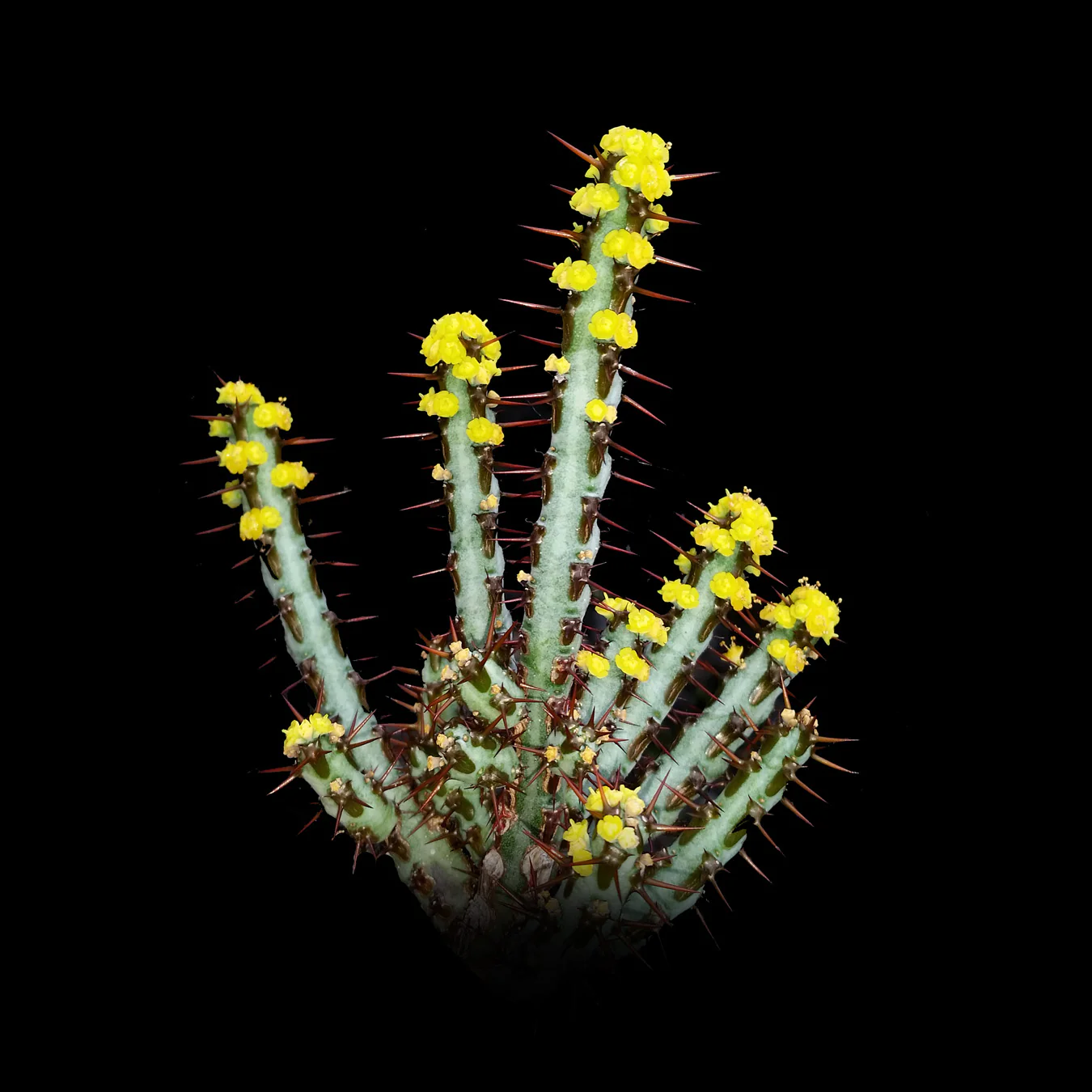
Euphorbia wakefieldii is a spiny, shrubby succulent native to dry regions of Kenya and northeastern Tanzania, typically occurring on rocky hillsides and well-drained savannah slopes. It grows as a small, irregularly branched shrub with slender green stems lined with prominent paired spines. Small reddish to yellow cyathia may appear at stem tips during the warmer months.
Care Tips:
- Light – Requires full sun or bright filtered light to maintain compact form
- Water – Drought-tolerant; water only when soil is completely dry
- Humidity – Best in dry environments with ample airflow
- Media – Use a sharply draining succulent mix with added grit or coarse sand
- Temperature – Keep above 10°C; protect from cold drafts and frost
- Fertiliser – Apply diluted cactus fertiliser sparingly during active growth
- Repotting – Repot infrequently; only when root space becomes limited
Additional Notes:
- Known to be toxic
Original: $14.29
-65%$14.29
$5.00

Description
Euphorbia wakefieldii is a spiny, shrubby succulent native to dry regions of Kenya and northeastern Tanzania, typically occurring on rocky hillsides and well-drained savannah slopes. It grows as a small, irregularly branched shrub with slender green stems lined with prominent paired spines. Small reddish to yellow cyathia may appear at stem tips during the warmer months.
Care Tips:
- Light – Requires full sun or bright filtered light to maintain compact form
- Water – Drought-tolerant; water only when soil is completely dry
- Humidity – Best in dry environments with ample airflow
- Media – Use a sharply draining succulent mix with added grit or coarse sand
- Temperature – Keep above 10°C; protect from cold drafts and frost
- Fertiliser – Apply diluted cactus fertiliser sparingly during active growth
- Repotting – Repot infrequently; only when root space becomes limited
Additional Notes:
- Known to be toxic